
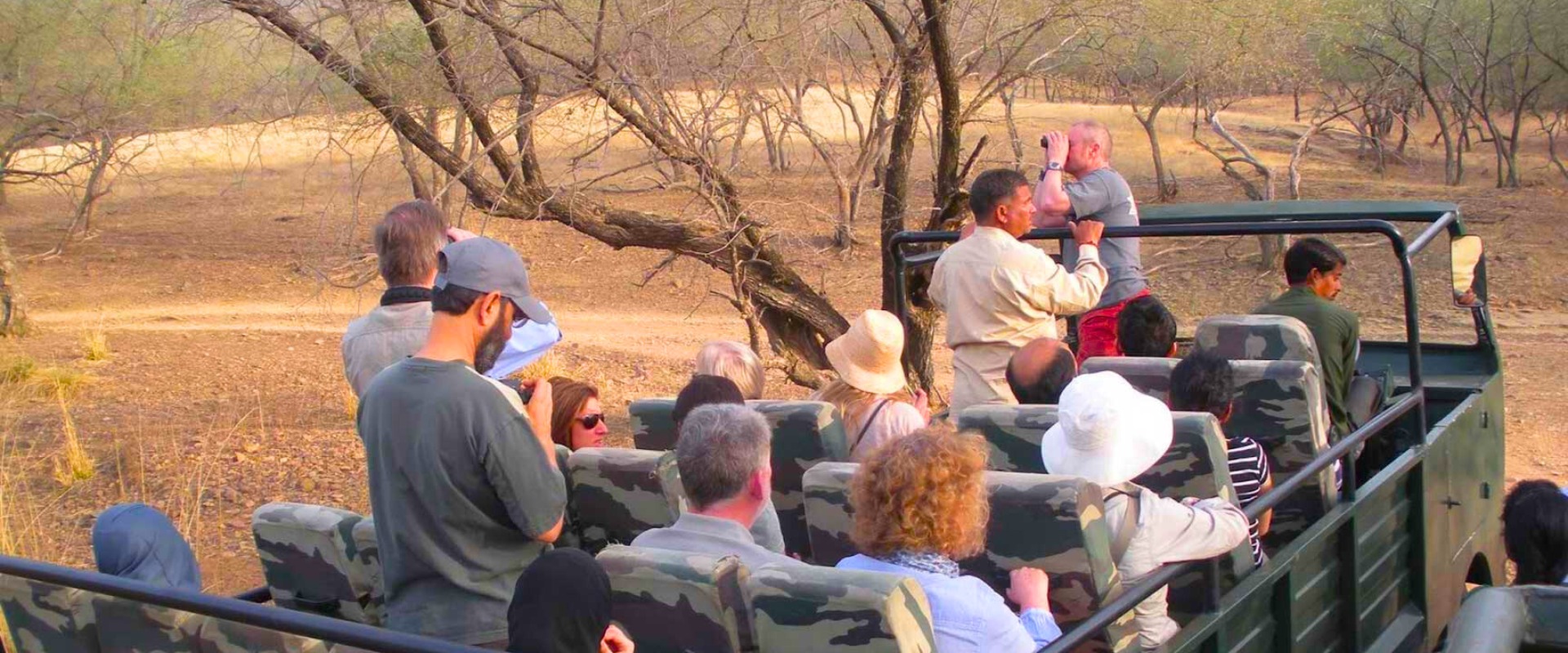
canter safari ranthambore

Canter Safari in Ranthambore – Complete Guide to Booking, Zones, Timings & Wildlife Experience

Book Your Canter Safari in Ranthambore for an Unforgettable Wildlife Adventure

A Canter Safari in Ranthambore is one of the most popular and affordable ways to explore the wilderness of Ranthambore National Park. Designed for larger groups, the canter safari offers an exciting opportunity to witness the rich wildlife, scenic landscapes, historic ruins, and famous Bengal Tigers of Ranthambore while enjoying a shared safari experience.

Whether you are visiting with family, friends, student groups, wildlife enthusiasts, or photography clubs, a Ranthambore Canter Safari provides a memorable journey through one of India’s most renowned tiger reserves.

Canter Safari Book in Ranthambore

safari booking

What is a Canter Safari in Ranthambore?

A Canter Safari is an open-air vehicle safari operated by the forest department for visitors who wish to explore the national park in a larger group setting. Unlike a jeep safari, which accommodates a limited number of visitors, a canter allows multiple passengers to enjoy the safari together while experiencing the beauty of the forest.

The elevated seating arrangement offers excellent visibility for wildlife viewing and photography.

Key Features of Canter Safari

✔ Open-Air Wildlife Viewing

✔ Ideal for Large Groups

✔ Budget-Friendly Safari Option

✔ Professional Forest Guide Accompaniment

✔ Access to Popular Safari Zones

✔ Excellent Wildlife Photography Opportunities


Why Choose a Ranthambore Canter Safari?

Thousands of visitors choose canter safaris every year because they provide an economical and enjoyable way to experience Ranthambore’s wildlife.

Benefits of Canter Safari

Cost-Effective Wildlife Experience

A canter safari is generally more affordable than booking an entire jeep, making it suitable for budget-conscious travelers.

Perfect for Groups

Families, educational tours, corporate outings, and large travel groups often prefer canter safaris because everyone can travel together.

Great Wildlife Viewing

The elevated seating position often provides excellent visibility of wildlife and surrounding landscapes.

Guided Safari Experience

Experienced guides and forest personnel help visitors understand the park’s ecosystem, wildlife behavior, and conservation efforts.


Ranthambore Safari Zones Covered by Canter Safari

Canter safaris typically operate in designated tourism zones of Ranthambore National Park.

Popular safari zones include:

Zone 1 : -Known for tiger movement and scenic landscapes.

Zone 2 :- Popular among wildlife photographers and nature enthusiasts.

Zone 3 :- Famous for lakes, fort ruins, and excellent tiger sighting opportunities.

Zone 4 :- Rich biodiversity and beautiful forest landscapes.

Zone 5 :- A preferred zone for frequent wildlife sightings.

Zone allocation depends on forest department regulations and availability at the time of booking.


Wildlife You Can Spot During a Canter Safari

Ranthambore National Park is one of India’s best wildlife destinations and offers exciting opportunities to observe animals in their natural habitat.

Mammals

  • Royal Bengal Tiger
  • Leopard
  • Sloth Bear
  • Striped Hyena
  • Jackal
  • Sambar Deer
  • Chital Deer
  • Nilgai
  • Wild Boar

Reptiles

  • Marsh Crocodile
  • Monitor Lizard
  • Various Snake Species

Birds

  • Crested Serpent Eagle
  • Painted Stork
  • Kingfisher
  • Indian Peafowl
  • Owl Species
  • Vultures
  • Migratory Birds

The diverse habitats of forests, grasslands, lakes, and rocky terrain make every safari unique.


Best Time for Canter Safari in Ranthambore

October to February

Pleasant weather and ideal conditions for sightseeing, birdwatching, and family travel.

March to June

Peak wildlife season and considered the best period for tiger sightings.

July to September

Certain tourism zones may remain operational depending on forest department regulations and weather conditions.


Canter Safari Timings

Safari timings vary according to season and park regulations.

Morning Safari

Ideal for birdwatching and observing wildlife during active hours.

Evening Safari

Perfect for photography and spotting animals near water sources.

Visitors should arrive well before reporting time to complete entry formalities smoothly.

Safari Terms & Conditions

  • The Government of Rajasthan reserves the right of admission.
  • Visitors may not be notified in advance if the park is closed for emergency reasons.
  • Once a booking has been confirmed, refunds or cancellations are not permitted.
  • All bookings are non-transferable.
  • It is not possible to resell/exchange reserved seats with another visitor.
  • Before entering the park, a photocopy of the identity proof must be submitted.
  • Before entering the park, you must show proof of your identity. We will also check your original ID.
  • In case of any revision to rates, visitors will be responsible for paying the difference upon entry into the park.
  • In order to board Gypsy/Canter, the visitor must be present 15 minutes before the scheduled departure time.
  • A Still Camera is free of charge.
  • Visitors to national parks and wildlife sanctuaries can be prohibited from using mobile phones by the Field Director/Conservator of Forests.
  • Any canter dispatch in the park must have at least 18 seats; if the number of seats booked is less than that, the department reserves the right to cancel the booking.
  • There will be an additional charge if the passengers are less than the vehicle’s capacity.
  • If guests’ requirements change after arrival, any changes must be made in writing.
  • Vehicle hire charges, vehicular park entry fees, visitor entry fees, and naturalist fees are charged in full in advance for park safaris. In advance bookings, the Forest Department releases vehicles only upon receipt of full payment, and no refunds or adjustments can be made.
  • If you cancel or amend your safari booking after you have received confirmation in writing, a cancellation or amendment fee equal to 100% of visitor entry fees + vehicle entry fees + vehicle hire charges + naturalist fees will be charged, depending on your vehicle request.
  • A cancellation or amendment to an unconfirmed safari booking will not result in a cancellation/amendment fee.
  • There will be a cancellation fee equal to 100% of the visitors’ entry fees, vehicle entry fees, vehicle hire charges, and naturalist fees if visitors arrive late and miss their first safari.
  • Visitor cancellation fees are equal to 100% of the visitor’s entry fee + vehicle entry fee + vehicle hire charge + naturalist fee if the visitor refuses to go on safari simultaneously.
  • In the event that the visitor chooses another excursion, such as Fort to drive instead of safari, he or she will be charged 100% of the entry fee plus vehicle entry fee + vehicle hire charge + naturalist fee.
  • A fee equivalent to 100% of the full group number of visitor entry fees + vehicle entry fees + full group number of seat charges + naturalist fees will be charged if some members of the group refuse to go on a safari at the same time.
  • There may be times during the season when canters are not running (particularly toward the end of the season) when a request for canter seat drives is not possible. Depending on the safari, we may provide Jeep safaris at a jeep rate.
  • Visitors may not be notified in advance if the park is closed.
  • There will be a possibility of changes in vehicle availability until the drive.
  • Let us know if entrance fees or government fees change. Guests and travel agents will be charged taxes in addition to the room rate. For all future bookings, the Ranthambhore park authority will inform you of any changes in policies.
  • Due to various government regulations, the Terms and Conditions may change or be amended without prior notice. A policy.
  • There may be a change in rates if there is a change in Validity Periods, Rate Seasons, Contracted periods, applicable laws, or government policies.

WHAT TO DO AT THE PARK AND WHAT NOT TO DO

In order to protect the park from outside influences, it should be kept as isolated as possible. In a national park, you are not allowed to use transistors, tape recorders, blow the car horn, or talk loudly. If you are quiet, you will be able to observe more wildlife.

In a national park, it’s smart to wear colours that blend in with the forest – khaki, brown, and olive green are ideal colours. Since they are not used to bright colours, animals might be scared of them.

It is not a smart idea to feed wild animals. They do not need junk food since they have plenty of natural food in the forest. Animals change their behaviour when you feed them.

Tetra packs, polythene bags, and other materials should not be littered around the place. As well as spoiling the beauty of the park, they may harm the animals as well. Don’t forget to dispose of them properly when you get back home.

Don’t get too close to any animal. They will be disturbed if you approach them too closely. You should not stand up when you are close to tigers as a large animal may perceive it as a threat and may attack.

Wear something that does not smell strongly if you wear perfume. Smells are very intriguing to animals, and they may become curious about them when they smell them.

Plants and animals should not be collected. Your gardens do not belong to them.

The majority of animals are shy and tend to hide when they see a human. If you throw stones or other objects at them, please don’t try to lure them out. Don’t interfere with their lives.

Carelessly caused fires should be prevented by strict precautions. Smoking and taking pictures with a flash are prohibited in the park.

A driver or guide is instructed on how fast to drive the vehicle, what route to follow, what distance to keep from other vehicles and wild animals, and how long to drive. It is never a good idea to encourage your driver to break these rules.

Entering before sunrise or staying after sunset is prohibited and you should not deviate from the allotted routes or leave the road and drive cross-country.

It is imperative for you to give your valuable suggestions and recommendations to help conserve the park. If you see someone violating the park’s rules or errant drivers, please report them. The National Park Field Director should also be notified if poachers are spotted.

Important

Be sure to bring mosquito repellent, sunscreen, antiseptic cream, a hat, socks, shoes, binoculars, a camera, extra film rolls, a water bottle, and warm clothes during the winter months.

Frequently Asked Questions

What is a Canter Safari in Ranthambore?

A Canter Safari is a shared wildlife safari conducted in a larger open-air vehicle that accommodates multiple visitors.

Is Canter Safari suitable for families?

Yes, canter safaris are suitable for families, student groups, and larger travel parties.

Which is better: Canter Safari or Jeep Safari?

Jeep safaris offer more flexibility and privacy, while canter safaris are more economical and ideal for larger groups.

Can I see tigers during a Canter Safari?

Yes, Ranthambore National Park is one of India’s best tiger reserves, and tiger sightings are possible during both jeep and canter safaris.

What is the best time to visit Ranthambore for tiger sightings?

March to June is generally considered the most favorable period for tiger sightings.


Plan Your Ranthambore Canter Safari Today

A Canter Safari in Ranthambore National Park offers an exciting and affordable opportunity to explore Rajasthan’s most famous wildlife destination. From majestic Bengal Tigers and Leopards to scenic lakes and historic ruins, every safari promises a unique experience.

Book your Ranthambore Canter Safari in advance and discover the incredible wildlife, natural beauty, and adventure that make Ranthambore one of India’s top safari destinations.